Budget 2026 lands seven days after the Bank of Canada’s first rate hike in more than three years
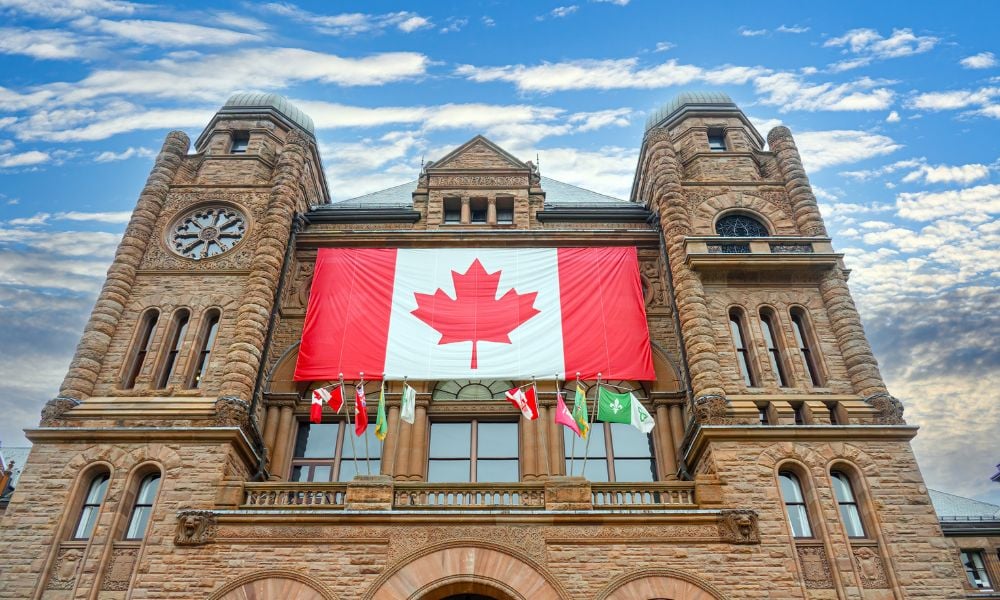
Ottawa tables Budget 2026 on November 5, seven days after the Bank of Canada’s first rate increase in more than three years.
The country’s national association for life insurance and financial advisory leaders has asked the federal government for changes to RRSP, RRIF and TFSA rules in the same fiscal plan.
The Conference for Advanced Life Underwriting (CALU) filed its submission to Finance Canada in September, asking Ottawa to:
- index unused RRSP contribution room annually
- permit RRSP contributions to age 75
- defer RRSP-to-RRIF conversion to age 75
- allow RRIF holders to exclude up to $180,000, indexed, from the minimum payment formula until age 85
- allow tax-free transfers of RRSP and RRIF money to a trust
- let TFSA holders buy a non-commutable pay-out annuity inside the account at a specified age, such as 60 or 65
CALU states in the submission that it speaks alongside Advocis for thousands of advisors.
The group writes that individuals now contribute more every year to their TFSAs than their RRSPs, with total TFSA contributions expected to surpass RRSP contributions over the coming decades.
On minimum withdrawals, the submission argues the rules create a reverse dollar-cost-averaging effect, forcing RRIF owners to sell more units as prices decline and leaving fewer units to grow when prices recover.
Citing a June 2023 Finance Canada report, CALU says more than 60 percent of RRIF holders withdraw only the minimum, and about half of those earning between $50,000 and $100,000 do the same.
The Bank of Canada lifted its policy rate to 2.5 percent on October 28.
Governor Tiff Macklem said the outlook for inflation is substantially higher while the economy shows resilience, making an increase necessary to reduce the risk of energy prices becoming generalized inflation, The Canadian Press reported.
Macklem said further increases could follow, with the bank proceeding carefully given the uncertainties.
The bank raised its 2027 inflation forecast to 3.1 percent from 2 percent, Al Jazeera reported, and its next decision falls on December 9.
Interest rate swap markets are pricing three more quarter-point hikes before the end of 2027, with roughly a 60 percent chance of another in December, The Globe and Mail reported, citing Bloomberg data.
Parliamentary Budget Officer Annette Ryan’s October 2026 outlook projects a $63.3bn deficit for 2026-27, peaking at $70.2bn in 2027-28, alongside real GDP growth of 0.9 percent this year and 1.5 percent in 2027, according to CBC News.
Scotiabank Economics estimates federal announcements since April approach $110bn, of which “only about half (~$63 bn) would carry an incremental fiscal cost.”
Randall Bartlett, deputy chief economist at Desjardins, told The Canadian Press the government’s classification of spending is “unclear, erroneous and, quite frankly, self-interested,” and that near-term deficits should come in lower on the energy windfall.
“As oil prices start to fade going forward, when that tide goes out, we’re going to see who’s not wearing their swimsuit,” he said.
Ottawa’s Productivity Mega Deduction, announced September 15, is projected to cut the marginal effective tax rate on new business investment to 6.4 percent from about 13 percent.
Charles Lammam, writing in The Hub, puts its cost at $8.5bn a year, roughly the fiscal weight of cutting the federal corporate rate from 15 percent to 13 percent.