A CCAA stay wasn't enough to save these condo contracts.
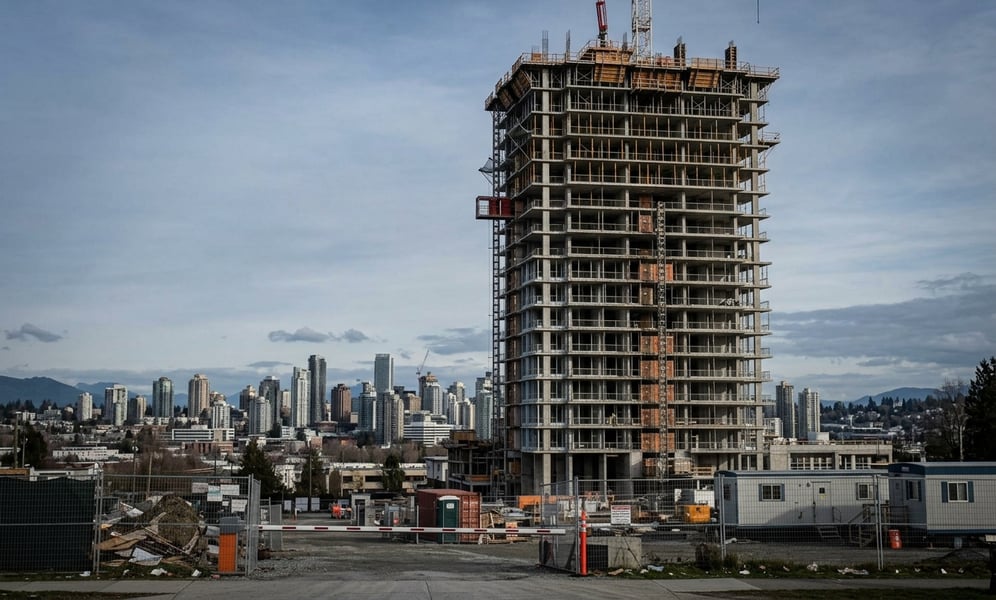
A BC court voided dozens of presale condo contracts in an active insolvency, leaving a $225 million lender exposed.
The ruling came down August 25, 2026, from the Supreme Court of British Columbia. Justice D.M. Masuhara found that 39 buyers of units in the 329-unit Lumina Eclipse tower in Burnaby could walk away from their purchase agreements under the province's Real Estate Development Marketing Act.
The development's owner had entered creditor protection in January 2025 after KingSett Mortgage Corporation, which had advanced a $124 million first mortgage and a $65.4 million second mortgage in 2021 and by then was owed more than $225 million, petitioned for relief under the Companies' Creditors Arrangement Act. AlixPartners Restructuring, formerly KSV Restructuring, was appointed monitor. Westmount West Services, the deposit insurer backed by Aviva Insurance Company of Canada and Liberty Mutual Insurance Company, held second-position security.
The purchasers, who had signed contracts between 2021 and 2023 with deposits ranging from about $35,000 to $205,000, argued the developer breached its ongoing duty under the act to promptly amend its disclosure statement whenever a material fact changed. They pointed to an undisclosed $12 million Canada Revenue Agency judgment from June 2023, a warranty-coverage suspension in October 2024, and a building-permit suspension the following month that halted construction. None of it reached buyers until a fifth disclosure amendment filed by the monitor in November 2025.
The ruling also settled an open question: whether section 23's unenforceability remedy reaches disclosure failures that surface after a contract is signed, not just misrepresentations that existed at signing. Masuhara held that it does, reasoning that the developer's ongoing duty to amend its disclosure statement would be toothless if a later lapse carried no consequence for enforceability.
Masuhara agreed the omissions were material and that the developer's continuing-disclosure duty survives past the day a purchase agreement is signed. He rejected arguments from KingSett, Westmount and the monitor that the CCAA stay barred the buyers from raising the defence, or that federal paramountcy overrides the provincial disclosure regime. Describing the provision at issue, he wrote that it "is a statutory shield, not a sword" - a defence to enforcement, not an independent claim subject to compromise in the restructuring.
The court did not decide whether the deposits, most of which had already been released to fund construction, must be returned. That question goes to a separate hearing.
For lenders and monitors managing distressed developments, the ruling signals that a CCAA stay does not freeze a purchaser's statutory defences, and that disclosure gaps can outlive the deal that created them.