Blockchain-based US equity tokens must carry dividend and voting rights, and issuers can block them within 30 days
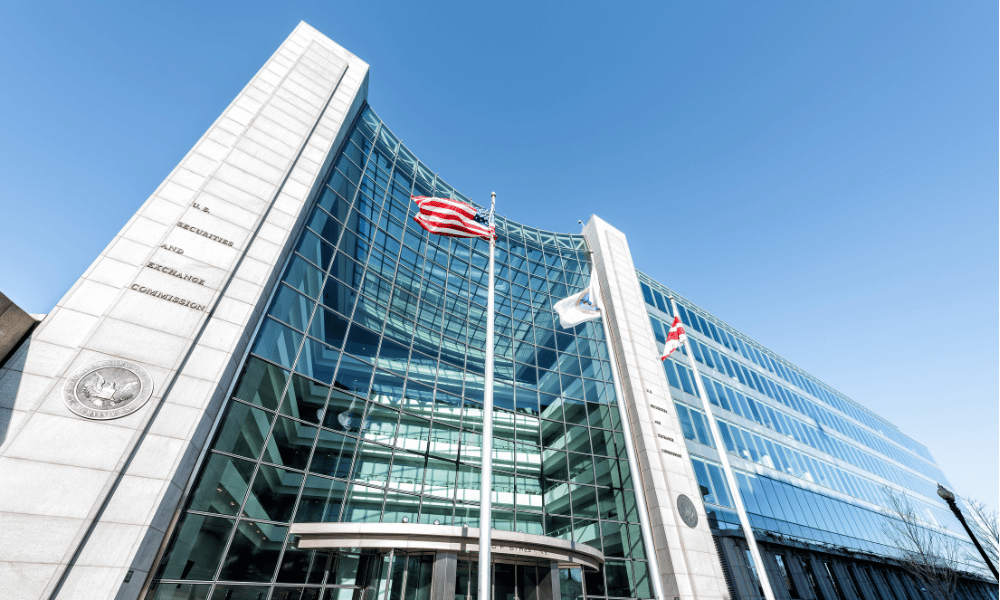
Tokenized versions of publicly traded US stocks can trade on qualifying US platforms immediately under a five-year exemption the US Securities and Exchange Commission issued last Thursday.
CNBC reported that the order takes effect immediately and is not a formal rulemaking.
Platforms that facilitate trading of tokenized stocks are exempt for five years from many of the rules that apply to the Nasdaq, the New York Stock Exchange and other stock exchanges, Reuters reported, and liquidity providers in tokenized stocks receive a five-year exemption from dealer registration requirements.
SEC Chair Paul Atkins said in a statement carried by CNBC that the Innovation Exemption is designed to "resolve challenges that have prevented responsible innovation from taking root in the United States."
It provides "investor protections and market integrity standards," he said.
In further comments reported by CNBC, Atkins said the Commission is "not cementing today's technology as the standard for tomorrow."
He said the interim measure "must be followed by durable rulemaking to ensure that onchain markets remain a viable pathway" as capital markets evolve.
Tokenized stocks must offer the same rights and privileges as traditional securities, including rights to receive dividends and exercise voting rights, the SEC said in comments reported by Reuters.
Platforms must notify companies before listing tokenized versions of their stocks and are barred from offering the products if the issuer objects, an SEC official told Reuters.
An SEC spokesperson told CNBC that trading venues should wait 30 days after a company receives notice before trading the token, and cannot make the tokenized stock available if the company objects within that period.
Synthetic tokens that offer exposure to a stock through a derivative or other product are not permitted, according to Reuters.
The exemption includes volume limits intended to mitigate risks and major swings, CNBC reported, which also identified increased volatility and greater exposure to large price swings in thinner trading as potential drawbacks.
A public dispute between the chief executives of Robinhood and AMC brought the rights question into sharper focus, CNBC reported.
AMC CEO Adam Aron argued that by creating exposure to AMC stock without the issuing company’s involvement, Robinhood and others enabling the practice undermine the traditional relationship between companies and their shareholders.
Robinhood said this week it plans to let stock-token holders redeem their tokens for the underlying shares on a one-to-one basis and to add voting rights, according to CNBC.
Shares in Securitize rose as much as 24 percent on Thursday and were last up 14 percent.
The company became the first major tokenization firm to go public in the US in early July and holds roughly 9 percent of the tokenized market by assets under management, according to Needham Securities.
The long-term leaders "will be those platforms that can secure the broadest base of institutional customers," Needham analyst John Todaro, who initiated coverage of the stock with a buy rating, wrote last week in comments reported by CNBC.
He said SECZ has launched two funds with BlackRock, Apollo, and KKR, and formed infrastructure partnerships with Computershare and the New York Stock Exchange.
Citing data provider RWA.xyz, CNBC reported the combined market value of tokenized assets reached US$38.51bn as of Thursday afternoon, up more than 70 percent over the past year.
Coinbase has signalled plans to launch tokenized stocks in the United States when the rules allow, according to Reuters.
Coinbase, Robinhood, Gemini and Payward’s Kraken exchange have launched offshore tokenized equity offerings but have yet to offer them to US customers, CNBC reported.
Reuters said many tokenized stock products marketed overseas rarely offer the same rights, disclosures and protections as traditional equities.
The US Senate failed to advance the Clarity Act two days before the order, according to CNBC, a crypto market structure bill that would have established rules for how digital assets, including tokenized securities, are classified and regulated.
Reuters described the exemption as part of a broader SEC crypto policy reversal under US President Donald Trump and reported that the SEC proposed in August 2026 exempting certain crypto companies and offerings from US securities rules.
The exemption forms part of the agency’s Project Crypto initiative, CNBC reported.
Analysts and attorneys told Reuters the exemption could over the long term pave the way for major structural changes to equities markets, bringing crypto firms into direct competition with traditional US brokerages including Morgan Stanley’s E*Trade and Charles Schwab.