Tax and permitting reform decides whether Canadians gain $12,000 each in output by 2035
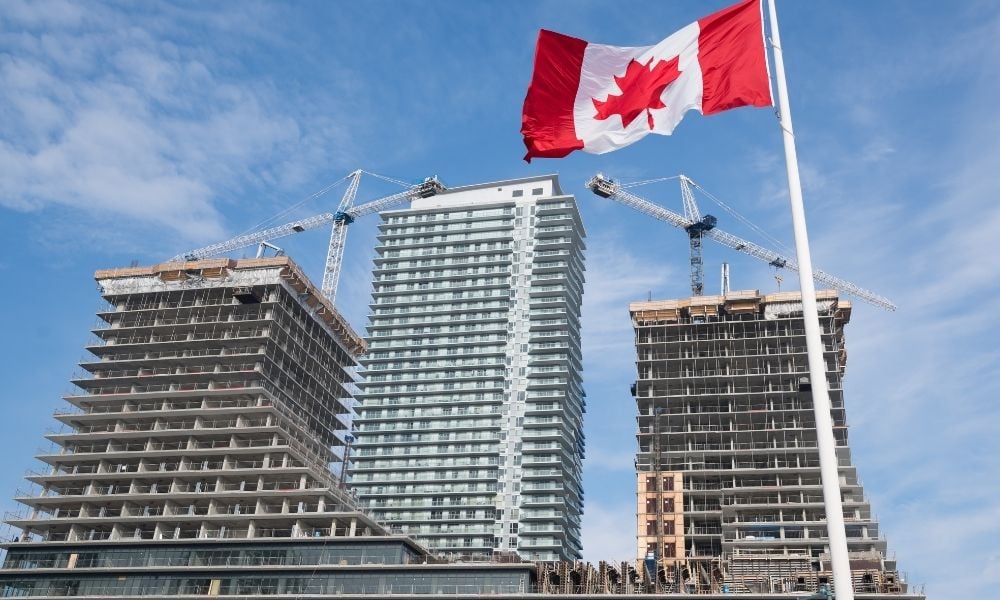
Just over $1tn in publicly announced projects sits approved or on the table across five Canadian sectors through 2035 and beyond.
TD Economics counted more than 300 of them in energy, resources, artificial intelligence (AI), defence, and transportation infrastructure in a recent report, putting the potential total at $1.5tn to $1.7tn over the next decade under a high investment scenario.
Energy accounts for $363bn, or 34 percent of the estimated spending, in the TD Economics tally, followed by defence at $281bn, AI at $158bn, resources at $140bn, and transportation at $114bn.
The report lists Wind West, the Peace River nuclear power project, the Alberta-British Columbia oil pipeline, modernisation of the North American Aerospace Defence Command (NORAD), and 86 mining projects among the proposals behind those figures.
More than $190bn of the spending falls within the bank's two-year forecast window, TD Economics estimates, with more than $500bn arriving over three to ten years and $270bn beyond a decade.
"Nibbling around the edges of past policies is unlikely to do the trick," wrote Beata Caranci, senior vice president and chief economist at TD, and Derek Burleton, deputy chief economist.
They identified four fronts for action:
- Lowering the regulatory wall for major projects
- Fixing tax disincentives
- Creating an environment where firms can scale
- Expanding skilled labour capacity
Non-residential investment reaches $1,076bn by 2035 in the high scenario, the report projects, against $786bn if only the announced projects proceed and $729bn in the baseline, from a common 2025 starting point of $497bn.
That path assumes real investment sustains 7 percent annual growth, matching the 2000 to 2010 pace and well above the roughly 2 percent long-run run rate.
TD Economics puts the payoff for households at roughly $12,000 in additional real output per Canadian by 2035, double the gain in its baseline.
Real gross domestic product (GDP) per capita growth would run at 1.8 percent annually from 2026 to 2035 in that scenario, against 1.0 percent in the baseline and the 0.5 percent recorded from 2016 to 2025.
Permitting timelines remain the clearest constraint on investment momentum for energy, mining, and infrastructure, TD Economics argues, noting that the 2019 federal Impact Assessment Act legislated a 180-day decision window while much of the delay occurs outside that formal clock.
Canada West Foundation research from 2023, cited in the report, found the initial planning phase alone averaged 332 days.
Leaders' Fund estimates cited by TD Economics show Canada's share of high-growth companies across Canada, the US, the EU, and Israel falling from 4.7 percent in 2016 to 1.5 percent in 2024.
The share of high-potential companies founded by Canadians that stayed in Canada dropped from 74.9 percent to 32.4 percent over the same period.
Construction alone will require hundreds of thousands of workers over the next decade, and major project build-outs will compete with housing and infrastructure renewal for the same tradespeople, engineers, and project managers, the report states.
Labour shortages could become the practical constraint that prevents Canada from converting investment intentions into completed projects, TD Economics warns.
Nova Scotia's estimated project spending equals 352.6 percent of its 2024 GDP in the provincial breakdown, ahead of the territories at 123.4 percent and Alberta at 66.5 percent, with Prince Edward Island lowest at 1.2 percent.
Fifteen projects and six transformative strategies had been referred to the Major Projects Office since September 2025, representing more than $126bn, according to the Prime Minister's Office, which set the first-ever Canada Investment Summit for September 14 to 15, 2026 in Toronto.
The Bank of Canada found in its second-quarter 2026 Business Outlook Survey that firms' investment intentions remained at a high level, though overall business sentiment deteriorated after three quarters of improvement.
RBC put the decade's net investment outflow from Canada above $1tn in its Capital Gains report, calculating that two dollars exited for every dollar invested from abroad.